Welcome to the gome of cyberpsychology
Cyberpsychologyst - Speaker - Author
ARIADNA VILALTA
International expert in cyberpsychology
My work focuses on translating the impact of neurotechnology and artificial intelligence into the language of mental health, ethics, identity, and human rights.
I act as a bridge between technological development and psychological understanding, helping individuals, organizations, and institutions understand how these innovations are transforming our minds, our behavior, and our autonomy.
My role is not only to analyze the technology, but to explain what it means for human beings.
Topics for conferences, talks, and research
- Neurotechnology and mental privacy: who enters our minds today
- Neurorights: the new human rights in the age of the connected brain
- From algorithm to brain: the new frontier of manipulation
- Mental health, AI and neurotechnology: clinical promise or colonization of the mind
- Childhood, attention and the digital brain: what we shouldn't normalize
- The future of cognitive work: brain surveillance and corporate well-being
- Freedom of thought: why we must protect the human mind now
As a expert cyberpsychologist in translating neurotechnology into the language of mental health, ethics, identity, and rights, I focus on 5 PILLARS:
01
The human mind must be protected as an inviolable space.
02
Not everything that is technically possible is psychologically acceptable.
03
Neurotechnology is not just medicine; it is also power, markets, and control.
04
We need neurorights before we can normalize brain data extraction.
05
Cyberpsychology should lead the debate.
BOOK
Una vida siempre en línea
Anatomía psicológica de una época
Technology doesn’t just organize our lives: it’s reorganizing our minds.
We live permanently connected. We sleep with our phones next to us, we work in front of screens, we get our news from social media, and we make everyday decisions using artificial intelligence. The digital world is no longer just an external environment: it’s the place where we live psychologically.
From the perspective of cyberpsychology, the discipline that studies how technology transforms the mind, behavior, and emotional life, Ariadna Vilalta analyzes how algorithms are reconfiguring attachment, attention, desire, self-esteem, truth, and critical thinking. It’s an idea as uncomfortable as it is urgent: we’re not just using technology, it’s shaping us. And understanding this impact is no longer optional; it’s a psychological, educational, and social necessity.
With a clear and rigorous approach, this essay addresses one of the great challenges of our time: understanding the invisible mechanisms that influence us in order to recover mental autonomy in an era designed to make us lose it.
It’s not a book to switch off to; it’s a book to encourage slow, thoughtful reflection. It’s not a book against technology; it’s a book in favor of understanding it before it decides for us.

- Editorial: Destino (Grupo Planeta)
- Release date: Junio 2026
- Language: Spanish
Media appearances and publications
Q&A
What exactly is CYBER PSYCHOLOGY?
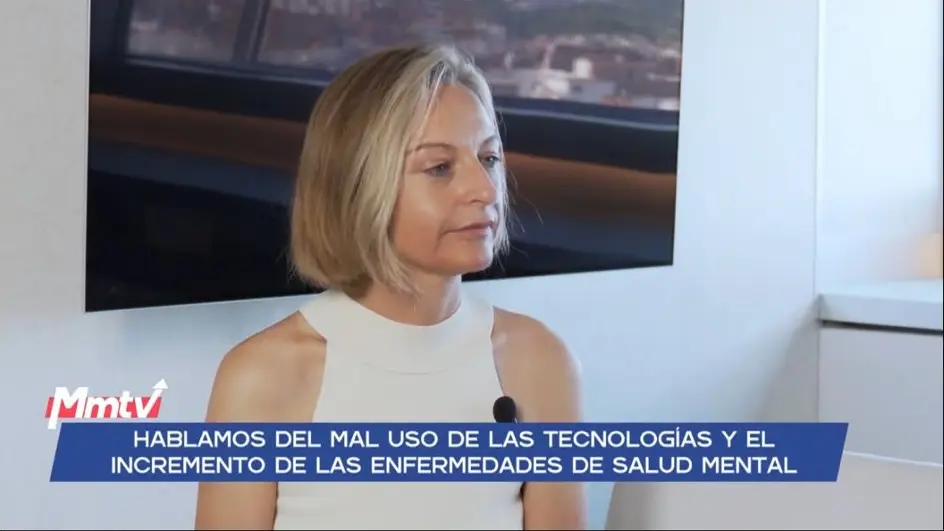
Cyberpsychology is a branch of psychology that studies how digital technologies, such as the internet, social media, video games, virtual reality (VR), and artificial intelligence (AI), influence human behavior, emotions, thoughts, and interpersonal relationships.
How is cyberpsychology applied?
By combining the principles of traditional psychology with the analysis of the impact of the digital environment, we offer tools and knowledge to address the challenges and opportunities of our technological age and apply them to fields such as the creation of digital interventions to improve mental health, the assessment of psychological risks associated with prolonged exposure to technologies, the design of ethical technologies that promote well-being and/or the prevention and management of cyberbullying in educational and work environments.
Can a non-specialized psychologist treat the same thing?
Cyberpsychologists are trained to understand how technology influences human thought, emotions, and behavior—something not always addressed in general psychology. They not only intervene but also educate on the healthy use of technology, which is essential in a hyperconnected world.
When is a cyberpsychology specialist particularly indicated?
We could highlight the following areas:
- Teenagers and young adults.
- Hyperconnected professionals.
- Parents concerned about their children’s screen time.
- People who work or socialize primarily online.
- People navigating online dating or digital relationships.