Cyberpsychology and digital society

Articles on digital mental health, artificial intelligence, online behavior, and neurotechnology.

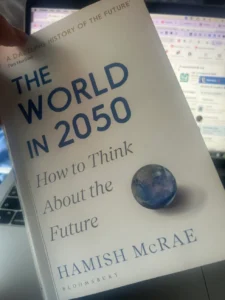
The World in 2050. A must-read.

Starting the year with an amazing reading from Hamish McRae
One of the things make me feel more excited about 2026 is my job. It is not a very fashionable thing to say nowadays. I feel we are in the era of «work is not important. Cannot be the center of your life». But we are in a historical moment. Doesn’t happen often. Add to that this historical moment join together my favourite themes: Ethics, Psychology, Technology.

Read more »

Cyberpsychology and business: why the “human factor” has become the new security system

For years, companies have invested in firewalls, encryption, technical audits, and AI solutions to fortify their digital infrastructure. All necessary. But incomplete. Today, the true critical point is another: user psychology. Human behavior is, for better or worse, the most common entry point for security incidents and at the same time the main strategic lever to build more resilient organizations.

Read more »

GLP-1: as an aid in Perimenopause

I have my own opinion, but I want to share this podcast so I can present an external view to mine.

I follow the doctor. Mary Claire Haver since I started investigating permenopause for my thesis. He recently shared this podcast with Dr. Rocío Salas-Whalen, endocrinologist with triple certification.

In this conversation he joins the doctor Mary Claire Haver to clarify doubts and share what women really need to know about Ozempic, Wegovy, Mounjaro and science behind sustainable weight loss.

Read more »

What’s happening to me? How can I tell if I’m entering perimenopause?

Feeling sad, upset, or worried is simply part of being human, and these feelings fluctuate over weeks and months, and throughout our lives. Women know this well, as it’s linked to our hormonal cycle.

It’s completely normal to feel irritable, angry, anxious, or down, but during perimenopause and menopause, the normal thresholds and frequency of these emotions can change. For some women, the change can be significant, and these feelings can last a long time.

Read more »

Why do they choose IA and not a psychologist or family member?

La Vanguardia shares a study that raises a red flag: 1 in 4 girls aged 17–21 prefers to trust an AI rather than a human to talk about their fears or anxieties.
This is not only due to technological advancement. It has roots in what we, as a society, have neglected: mental health, emotional education, and accessible support networks.

Read more »

Life, Death, and AI

Digital Mortality – emphasizes the tension between technology and human finitude.
In an era where technology increasingly mediates our most personal experiences, artificial intelligence (AI) is now entering one of the most sacred human journeys: grief. AI grief therapy—through tools often referred to as «Thanabots,» «Deadbots,» or digital avatars—allows people to interact virtually with representations of deceased loved ones. This rapidly emerging field, often called «digital afterlife technology,» is raising profound psychological, cultural, and ethical questions.

Read more »

We MUST RETHINK the anonymity on INTERNET

I became a CYBERPSYCHOLOGIST because Prof. Mary Aiken PhD

I don’t know how I discovered her but the very first time I heard her speaking, I knew I wanted to work in the cyberpsychology field.

What I am going to write today here is not a random thought. It is probably not a very popular idea, but I strongly believe in it.

Some days ago, the psychologist Jose Luís García Fernandez – another professional I admire deeply – shared a quite hard-to-watch video about online pornography.

I found myself thinking: why don’t they identify themselves when they register?

Read more »
Scroll to Top